
How To Improve Your Gut Health.
Table of content:
- The importance of gut health and its connection to the brain.
- How to maintain good gut health?
- Interesting fact about gut microbes.
- What are Probiotics and Prebiotics
- Less popular but super easy gut friendly foods.
- Conclusion
Gut health refers to a healthy digestive tract with effective digestion and Absorbtion of nutrients.
Did you know, there is an entire ecosystem of millions of microbes living inside you called your ‘Gut Microbiome’ ? The diversity and quality of these microbes affects our overall health and ability to fight diseases.
The importance of gut health and its connection to the brain.
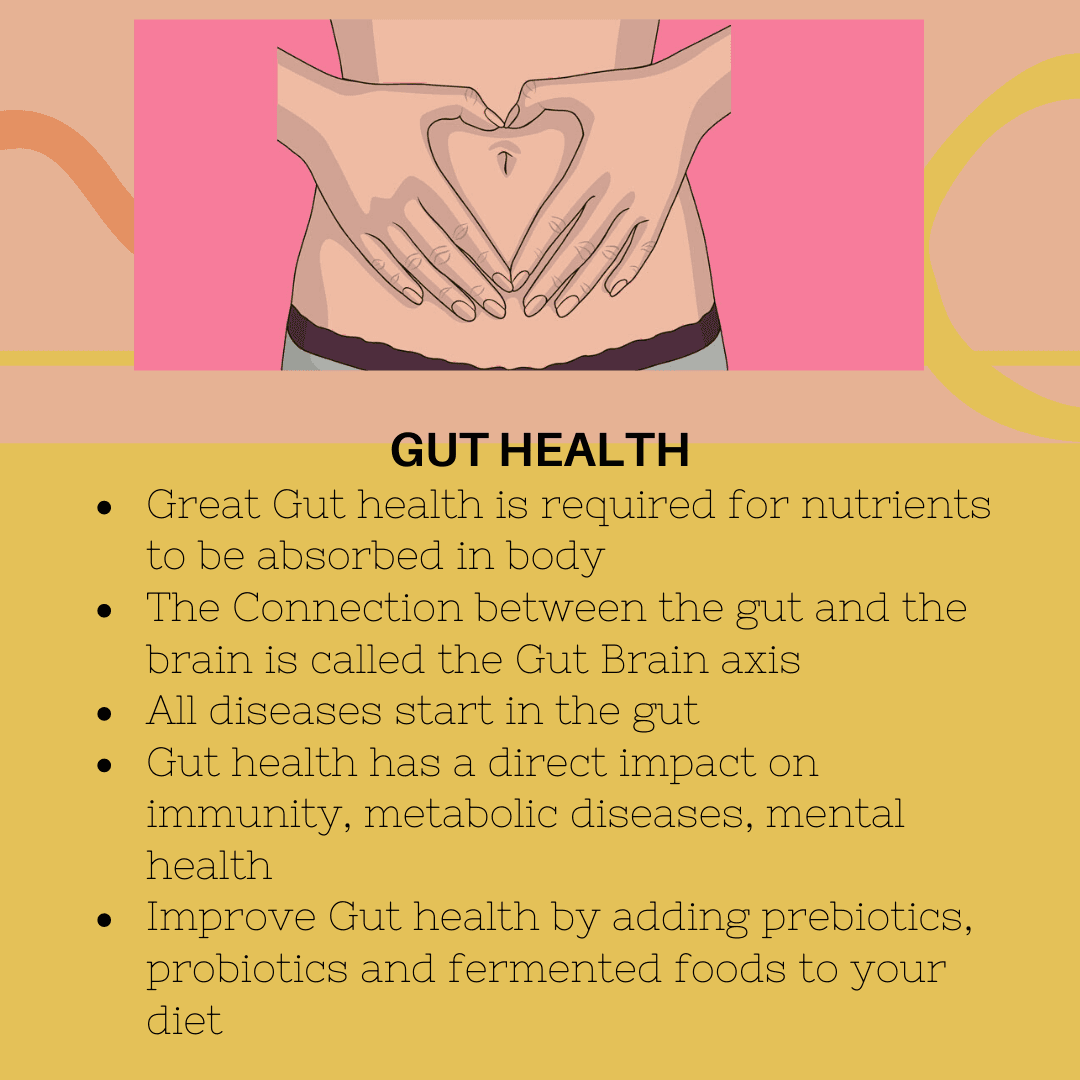
It has always been known that the microbes living in our gut, play a role in our dietary needs and maintaining digestive health, but scientists are recently discovering something called ‘Gut Brain Axis’.
Gut brain connection has always played a major role in Indian medicine a popular Ayurvedic saying is, ‘All diseases start in the gut’.
This is fast catching up with the western world and extensive research is Being done to find impact of gut health on immunity, mental health and metabolic diseases.
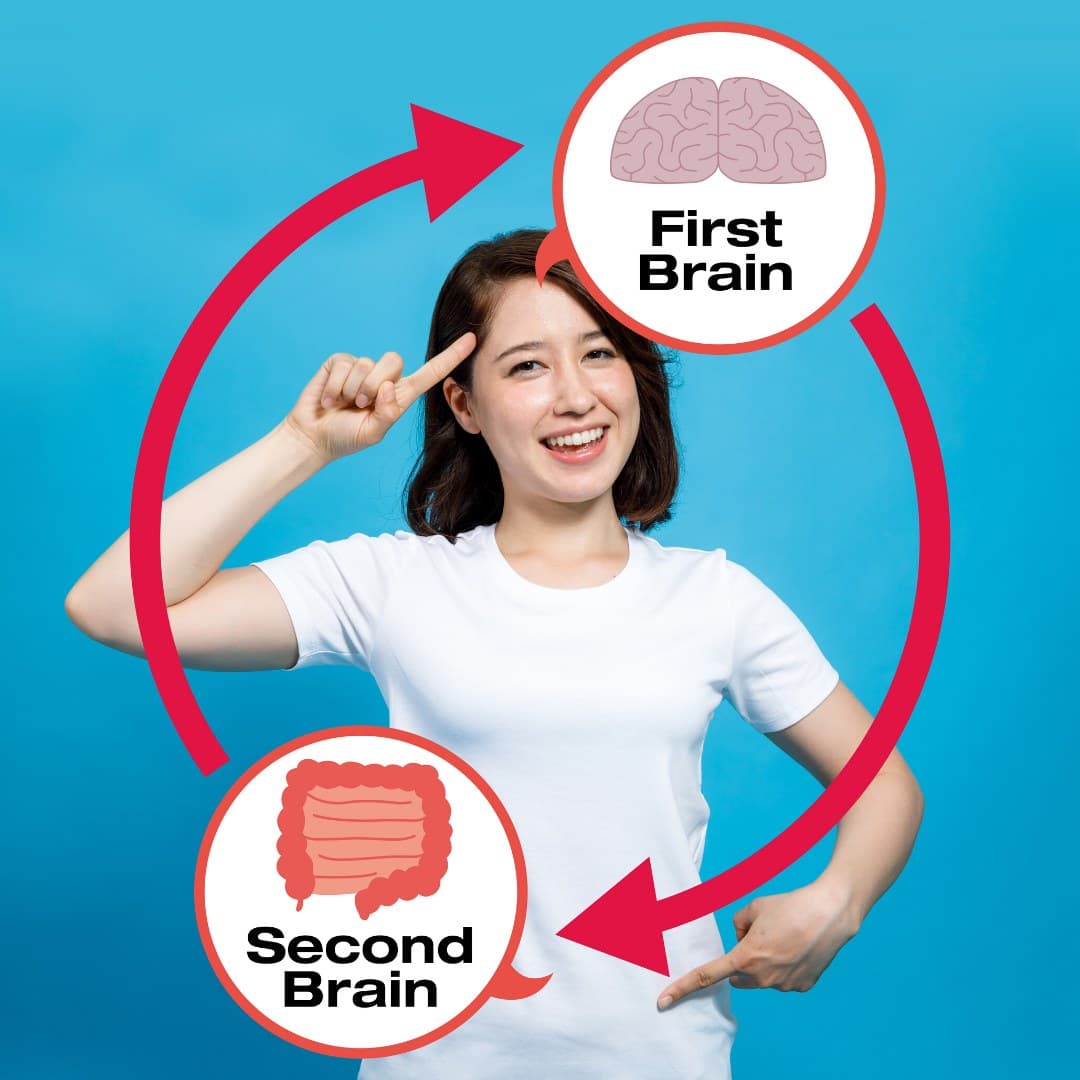
The gut is called your second brain because it is directly connected to the brain by nerves and information travels to and fro, from the brain to the gut.
Have you ever had the loosies when stressed? Now you know why! The brain and the gut talk to each other.
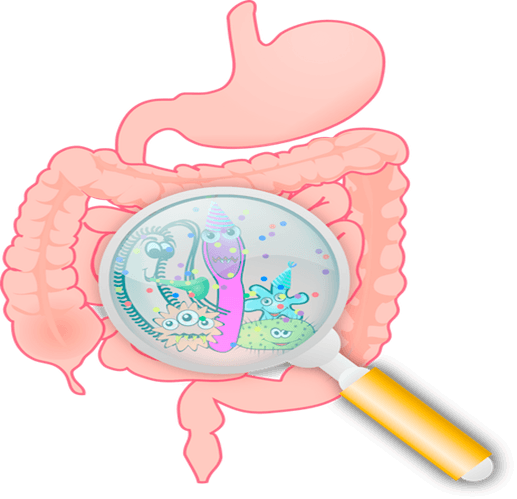
The microbes in your gut produce a lot of chemicals that affect your brain, for e.g. 80% of serotonin the feel good hormone, is produced in the gut. And the amount of these hormones produced depend on your gut microbiota.
The gut microbiota not only digest food, they also play a role in overall health.
How to maintain good gut health?
Gut health refers to maintaining a good balance of microorganisms living in the digestive tract. This means bigger colonies of good bacteria over bad bacteria.
By making diet and lifestyle changes you can influence your gut flora positively.
Improving dietary habits, eating healthy whole foods, getting enough sleep, reducing stress, daily exercise and adding lots of fibre to the diet all help to keep the gut healthy.
Adding probiotics and prebiotics is the most important step in building a healthy gut.
Reducing simple sugar, processed, packaged foods, cutting down on alcohol and smoking helps improve gut balance.
Over use of antibiotics and laxatives can cause dysbiosis.
Going on severe restrictive diets can have long term damaging effects.
Stress and lack of sleep negatively effects, whereas exercise has a positive influence on gut microbiota.
Interesting fact about gut microbes.
Within the gut there is approximately 1014 microorganisms, which is 10 fold more bacterial cells than human cells. The bacterial genome in humans is 150 times more than human genome, so basically there is a ‘Superorganism’- your microbiome, living inside you in other words you are more bacterial cells than human cells.
What are Probiotics and Prebiotics
- Probiotics - are live bacteria that are good for the digestive system.
- Prebiotics - fibre that acts as food for the good bacteria
Foods that are good sources of Probiotics and Prebiotics
Microbiota accessible Carbohydrates - whole grains, legumes, pulses, sprouts, nuts and seed
Fruits and Vegetables are an important part of the good microbiome diet.
Fermented foods like yogurt, buttermilk, idli/dosa, pickling vegetables are great sources of probiotics.

kombucha, kefir, sauerkraut, apple cider vinegar, onions, ginger, garlic, leeks, bananas, aged cheese all act as prebiotics and food for the good bacteria to thrive upon.
Less popular but super easy gut friendly foods.
Kanji - A popular north Indian brine drink made by boiling carrot or beetroot in salt water with a dash of mustard seeds and red chilli and leaving to ferment for a fortnight is as powerful as the famous Kombucha.
Bone broth - vegetarian and non vegetarian bone broth, is full of calcium with is important for gut microbiota to sustain.
Conclusion
The more diverse your gut microbiome is the healthier you are, this happens only when the healthy bacteria outweigh the unhealthy ones, say by a ratio of 85% to 15% respectively.
When the unhealthy ones overtake you reach a state of dysbiosis, this is responsible for long term inflammation and inflammatory disease, also the immune barrier in the gut is affected leading to autoimmune response and autoimmune diseases.
The importance of a healthy gut microbiome cannot be emphasised enough to lead a healthy life .
Sources -
- https://www.semanticscholar.org/paper/Exercise-and-associated-dietary-extremes-impact-on-Clarke-Murphy/731a137980c075fe516fe1fdd8d7c9301dc27989
- https://www.ncbi.nlm.nih.gov/pmc/articles/PMC5872783/
- https://www.ncbi.nlm.nih.gov/pmc/articles/PMC4367209/
- https://psychscenehub.com/psychinsights/the-simplified-guide-to-the-gut-brain-axis/
- https://www.ncbi.nlm.nih.gov/pmc/articles/PMC1395357/